
What Is a HERS Score? A Guide for Rio Grande Valley Homebuyers
When a builder says a home is “energy efficient,” there’s no law requiring proof behind that claim. A HERS score — assigned by an independent, certified rater — is the measurable standard that separates real efficiency from marketing language.
This guide covers how the HERS scoring system works, what score to target in South Texas, and which questions to ask before you buy.
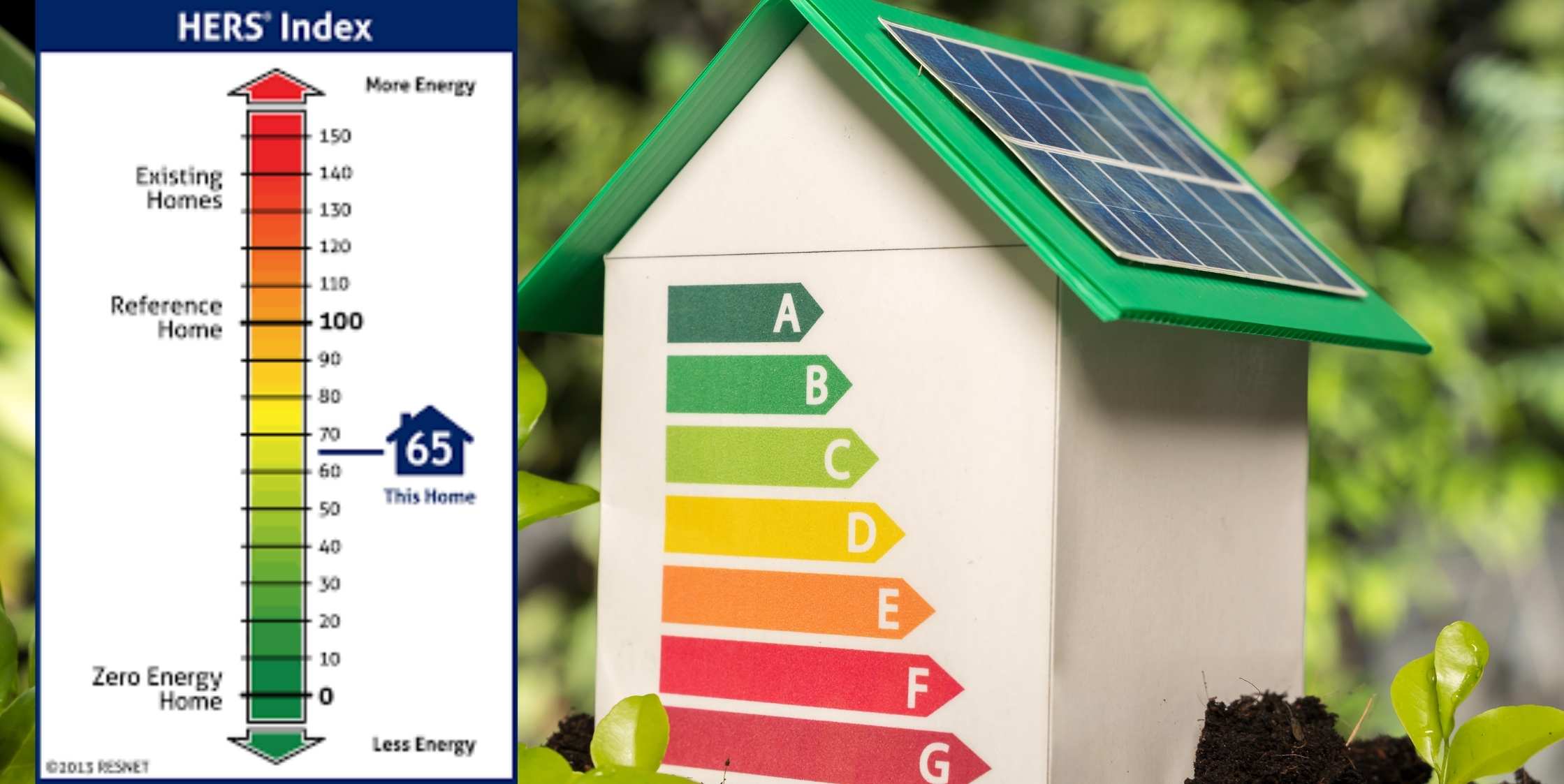
What Is a HERS Score?
HERS stands for Home Energy Rating System — a national standard developed by RESNET (Residential Energy Services Network) that measures a home’s energy use against a code-built reference home.
The score works like a golf score: lower is better. A RESNET-certified rater evaluates the home’s insulation, air sealing, windows, HVAC equipment, and ductwork, then runs the results through approved energy modeling software to produce a single number.
That number lets you compare one home to another — in the same subdivision or across the country — using the same objective scale.
How the HERS Scale Works
The scale anchors at 100, which represents a home built exactly to the 2006 International Energy Conservation Code (IECC). Each point below 100 equals roughly 1% better efficiency than that baseline.
- Score of 100 — Meets minimum code, nothing more
- Score below 100 — Outperforms code
- Score above 100 — Underperforms code
- Score of 0 — Net-zero: the home produces as much energy as it uses
HERS Score Comparison Table
| Home Type | Typical HERS Score | What It Means |
|---|---|---|
| Code-built home | ~80 | Meets minimum building code |
| ENERGY STAR certified | ~65 | At least 10% more efficient than code |
| Built to Save® certified | ≤63 | Significantly outperforms code and ENERGY STAR |
| Zero energy home | 0 | Produces as much energy as it uses |
Built to Save® sets 63 or below as its certification threshold — a number that produces real monthly savings in one of the hottest climates in the United States.
What Is a Good HERS Score in South Texas?
In a mild climate, a score of 70 or 75 causes modest inefficiency. In the Rio Grande Valley, where air conditioners run nine or ten months a year and summer temperatures top 100°F regularly, that gap turns into hundreds of extra dollars per year on your electric bill.
63 or below is the Built to Save® standard — and the right benchmark for RGV homebuyers. The lower the score, the less the home strains the HVAC system to stay comfortable, and the less you pay Magic Valley Electric Cooperative or any other utility each month.
Any builder who claims “energy efficient” but cannot show a certified HERS score deserves more questions.
How Is a HERS Score Calculated?
The score is not self-reported. A RESNET-certified HERS Rater — independent of the builder — evaluates the home through a multi-step process:
- Plan review — The rater studies construction plans before building starts
- Inspections during construction — The rater verifies insulation, window specs, and air sealing while walls are still open
- Blower door test — Pressurizes the home to measure air leakage through the envelope
- Duct leakage test — Confirms conditioned air stays inside the living space, not leaking into the attic
- Energy modeling — All field data feeds into RESNET-approved software that calculates the final score
Because the rater has no financial stake in the outcome and the process follows a national standard, a HERS score from a home in McAllen is directly comparable to one from a home in Austin or Houston.
For Built to Save® certified homes, every rating uses a RESNET-certified rater approved through the program — adding a second layer of accountability beyond RESNET’s own requirements.
Why HERS Scores Matter More in South Texas
The Rio Grande Valley has no shoulder season. There is no comfortable spring month when you open the windows and give the air conditioner a rest. Cooling loads here rank among the highest in the country.
The difference between a HERS 80 home and a HERS 60 home is not a rounding error — it is several hundred dollars per year in electric costs, paid every year of your mortgage.
The Built to Save® certification was built specifically for this climate. Beyond the HERS score threshold, the program requires tight duct systems, high-efficiency HVAC equipment, proper attic insulation, and low-solar-gain windows — the combination that holds its own when temperatures hit 105°F.
HERS Score vs “Energy-Efficient” Marketing
Builders can legally market a home as “energy efficient” with no independent verification. Double-pane windows, LED lighting, and a newer HVAC unit all help, but none of them produce a certified, whole-home measurement.
A HERS score from a certified rater is a measured outcome, not a checklist. It reflects how every component in the home performs together, tested and verified by someone who does not work for the builder.
When comparing homes, look for:
- A documented HERS score — not a general efficiency claim
- Third-party verification from a RESNET-certified rater
- A score of 63 or below, matched to South Texas conditions
For a side-by-side look at how programs compare, see Built to Save® vs. ENERGY STAR vs. DOE Zero Energy Ready Homes.
Can Two Homes Have Similar HERS Scores but Feel Different?
Yes — and understanding why matters before you buy.
Two homes can carry identical HERS scores but perform differently because of:
- Construction quality — Improperly installed insulation can pass paperwork review but fail in practice
- Equipment sizing — An oversized HVAC unit short-cycles, creating humidity problems even when the score looks acceptable
- Duct location — Ducts running through an unconditioned attic lose efficiency in ways energy modeling may not fully capture
The inspection process matters as much as the final number. Built to Save® certified homes require rater inspections at multiple construction stages — not just a post-completion blower door test.
Questions Homebuyers Should Ask
Before making an offer on any new home in the RGV, get direct answers to these:
- What is this home’s HERS score? Ask for the actual number.
- Did an independent RESNET rater certify the score? Or did the builder provide it themselves?
- Were inspections done during construction or only after the home was finished?
- What HVAC system is included, and is it properly sized for this floor plan?
- Is this home Built to Save® certified, or does it carry another verified efficiency program credential?
If you’re looking at new homes in McAllen, start here: Energy-Efficient New Homes in McAllen. For Edinburg, see Energy-Efficient New Homes in Edinburg, TX.
HERS Scores and Long-Term Costs
A home’s energy performance shapes your finances for as long as you own it. A household saving $150 per month on electricity over a 30-year mortgage saves $54,000 in nominal terms — before factoring in rising utility rates.
Documented HERS certifications also show early signs of lifting resale value, as more buyers factor long-term operating costs into their purchase decisions. A certified score gives future buyers the same objective information it gives you now.
Frequently Asked Questions
What is a good HERS score in Texas?
In the Rio Grande Valley — and most of Texas — target 63 or below. That is the Built to Save® certification threshold. ENERGY STAR homes typically score around 65. Anything above 75 in a South Texas climate means higher monthly utility costs and heavier HVAC demand.
Who calculates a HERS score?
A RESNET-certified HERS Rater calculates the score. This is an independent energy auditor — not affiliated with the builder — who completes specialized training and uses standardized software. Built to Save® certified homes use raters approved specifically through the program.
Does a HERS score affect home resale value?
Research points toward homes with documented energy certifications and lower HERS scores commanding higher resale prices, especially as buyers pay closer attention to long-term operating costs. A certified HERS score is a verified, transferable document — not a builder claim — which carries weight with future buyers and their lenders.
Is a lower or higher HERS score better?
Lower is better. The HERS scale works like a golf score: the smaller the number, the more efficient the home. A home scored at 50 uses less energy than one scored at 80. A score of 0 means the home produces as much energy as it consumes. Scores above 100 fall below the 2006 code baseline.
Do all Built to Save® certified homes have a HERS score?
Yes. Every Built to Save® certified home is rated by a RESNET-certified HERS Rater and must score 63 or below. RESNET-certified raters verify the score independently — the builder does not self-report it. When you buy a Built to Save® certified home, the rating documentation comes with the certification materials.
Ready to Find a Certified Home?
A HERS score gives you objective data — not a sales pitch — to evaluate a home’s real energy performance. In the Rio Grande Valley, where the HVAC system works harder than nearly anywhere else in the country, that data is not optional.
Built to Save® certified homes are independently rated, third-party verified, and required to hit the 63-or-below threshold that South Texas conditions demand.
Explore Built to Save® certified homes near you → Or find a certified HERS Rater in the Rio Grande Valley to learn how the rating process works firsthand.