
Energy-Efficient New Homes in Mission, TX — Built to Save® Certified
Mission families don’t just buy houses — they choose the streets where their kids will ride bikes, the neighborhoods where grandparents will move in, and the homes where three generations will crowd around a table on weekends. A home that drains your budget every summer gets in the way of all of that.
Built to Save® is a home energy certification program sponsored by Magic Valley Electric Cooperative (MVEC). Every home that earns the certification is independently tested and verified to reach a HERS/ERI score of 63 or lower — or to perform at least 5% better than Texas energy code. That result comes from a third-party rater, not the builder’s sales sheet.
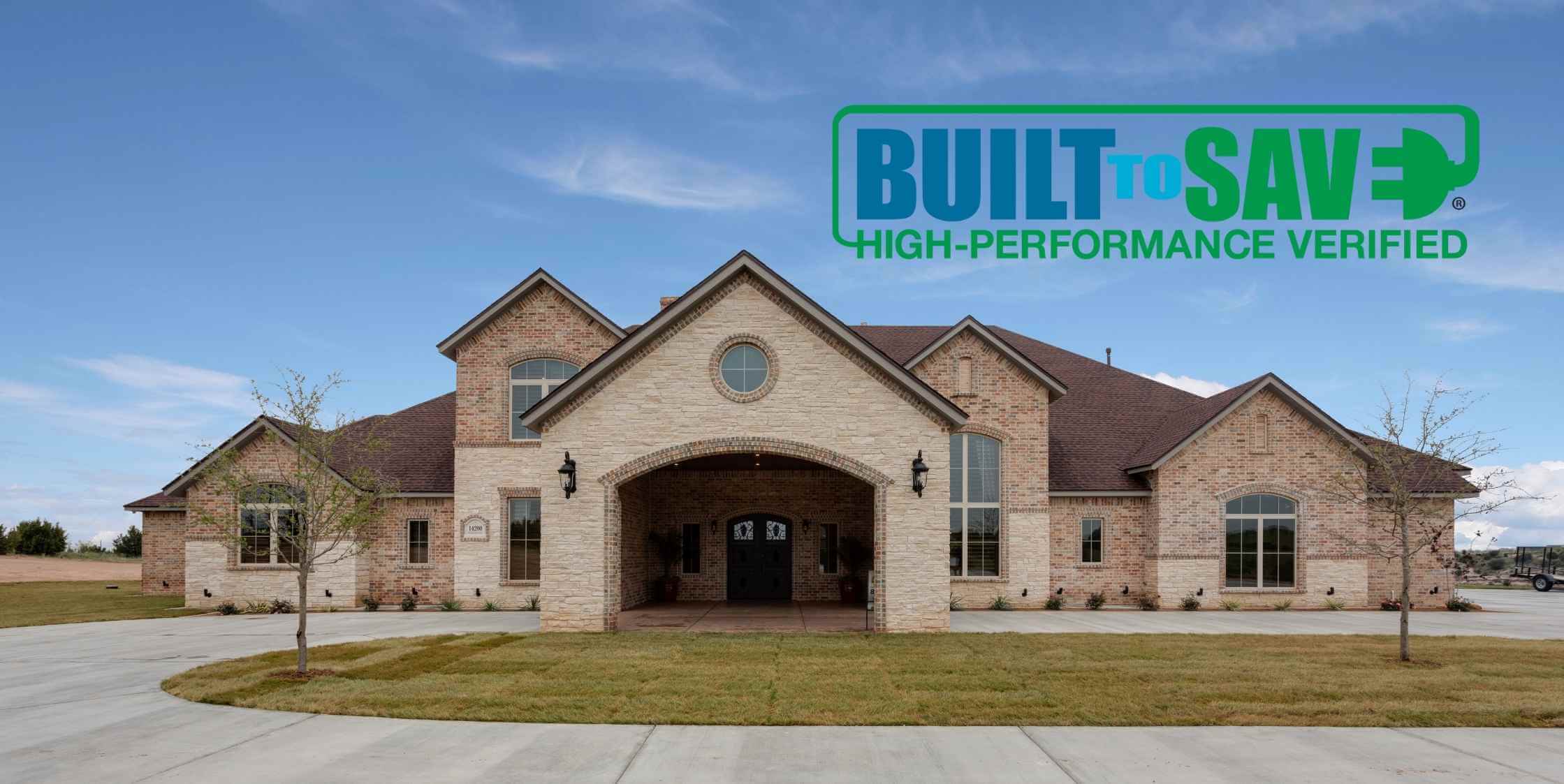
Mission, TX: A Community Built Around Family — Your Home Should Be Too
The Western RGV’s Growing Residential Appeal
Mission earned its nickname — the “Home of the Grapefruit” — from the rich agricultural land that shaped the city. Today, it’s one of the fastest-growing residential communities in the Valley, drawing families who want a strong sense of place, solid schools, and a community with roots.
New home construction runs active throughout the city, from neighborhoods near the historic downtown to newer subdivisions spreading toward Mission’s outer edges. That volume of construction means buyers face a wide range of quality — and the need to verify what they’re actually getting before they sign.
What South Texas Heat Costs a Family That Doesn’t Plan for It
Mission sits in one of the hottest climate zones in the continental United States. Summers regularly hit 100°F, afternoon humidity compounds the heat, and the cooling season stretches from April through October.
A new home that only meets minimum code requirements can run a South Texas family $200–$350 more per month in electricity during peak cooling months. That’s $2,400–$4,200 per year leaving the household — money that could pay for a semester of community college, cover a vehicle repair, or stay in a savings account. Built to Save® certified homes are designed to stop that leak before move-in.
What Built to Save® Certification Means for Mission Homebuyers
Independent Inspectors, Not Builder Self-Reports
Builder marketing can say whatever it wants. A RESNET-certified third-party rater has no financial stake in the sale — their job is to measure the home accurately and report the number. Built to Save® requires that independent rater to inspect every certified home before the certification is issued.
The HERS Score: Your Home’s Energy Report Card
Every Built to Save® certified home receives a HERS score — the Home Energy Rating System index. A score of 100 reflects the energy performance of a standard 2006-code reference home. Lower means more efficient. Built to Save® homes must score 63 or below.
For perspective:
- The average resale home in Texas scores around 130
- A newly built code-minimum home might score in the low 80s
- A Built to Save® home scores 63 or lower — significantly better than most new construction in the state
You can learn more about what a HERS score means for Texas homebuyers here.
Two Inspections That Protect Your Investment
Built to Save® isn’t a one-time walkthrough at closing. Certification requires two separate inspections:
- Pre-drywall inspection — the rater examines insulation, air barriers, framing details, and duct placement while the walls are still open. Problems found here can still be corrected.
- Final inspection — includes a blower door test to measure air leakage and a duct blaster test to confirm the HVAC system is sealed correctly.
Both happen before you close, so the score you’re told reflects the home you’re actually buying.
How a Certified Home Makes Life Better for Mission Families
Lower Monthly Bills — More Budget for What Matters
Your air conditioner is the single largest driver of electricity costs in South Texas. Built to Save® certified homes reduce the load on that system through better insulation, tighter air sealing, and properly sized equipment — so the unit runs less to hold the temperature you set.
Families in certified homes consistently report lower utility bills compared to neighbors in similar-sized homes without certification. For a three- or four-bedroom home in Mission, the annual difference can reach $1,500–$3,000 — money that stays in the family budget instead of going to the utility company.
Consistent Comfort in Every Room
Uneven temperatures are one of the most common complaints in non-certified new homes. A living room holds cool while a back bedroom turns into a sauna. Hallways never quite cool down. These are signs of leaky ducts, poor insulation, or equipment that wasn’t sized for the actual house.
Duct testing and air sealing are built into the Built to Save® certification process. Every room in a certified home holds temperature properly because the system was verified to do exactly that — not assumed.
Healthier Air for the Whole Household
A tightly built home controls what gets in. Rather than pulling in outdoor dust, pollen, and wind-driven particulates through gaps in the envelope, a well-sealed home lets the ventilation system manage fresh air exchange deliberately — filtering what circulates through your living space.
For multigenerational households — grandparents with respiratory conditions, young children with allergies, family members with asthma — this matters more than most builders will tell you. Proper ventilation in a certified home actively supports the health of everyone under the roof, not just the comfort of the person paying the electricity bill.
A Home Built to Handle South Texas Humidity
Humidity creates structural problems over time. Homes that aren’t properly sealed and vapor-managed develop moisture inside wall cavities — which leads to mold, wood rot, and HVAC failures that get expensive fast. Built to Save® certification requirements address moisture management during the inspection process, giving Mission homes a stronger foundation for long-term performance.
Questions Mission Families Should Ask Before Signing
Protect your family before you sign. Ask every builder these five questions:
- “Is this home Built to Save® certified or in the process of being certified?” Not every new home is. Some builders participate, many don’t. If the answer is vague, ask for documentation — certification is tracked and verifiable.
- “What HERS score will this home receive?” A builder who gives you a specific number — ideally 63 or below — is working with a rater and has a real target. A builder who can’t answer hasn’t committed to the process.
- “Who is your third-party energy rater — and are they RESNET certified?” The rater must be independent and credentialed. You can find a certified rater through the Built to Save® program directory.
- “Will my family’s air quality and humidity be managed properly in this home?” Ask specifically about ventilation design, vapor barriers, and duct sealing. A builder who can’t answer clearly hasn’t engineered the home for South Texas conditions.
- “How does this home compare to minimum Texas energy code?” Texas energy code is the floor, not the goal. A home built only to minimum code will cost your family more to operate than one built to Built to Save® standards. Ask what’s above code.
How to Find Built to Save® Homes and Builders in Mission
Built to Save® certified homes are built by participating builders who register with the program and submit every certified home to third-party inspection. Not every subdivision in Mission will have certified homes — but the list of participating builders grows each year.
To find certified homes and builders in Mission, TX:
- Visit builttosave.org and use the builder directory
- Contact the Built to Save® team directly at 956-778-3590 or info@builttosave.org
- Ask any builder you’re meeting with whether they participate in the program
Builders in Mission interested in registration can learn more about the builder registration process.
Certified homes are also available in nearby communities — including energy-efficient homes in McAllen and energy-efficient homes in Edinburg.
Frequently Asked Questions — Mission, TX Homebuyers
What is the Built to Save® program? Built to Save® is a home energy certification program sponsored by Magic Valley Electric Cooperative (MVEC). It certifies new homes that meet or exceed a HERS/ERI score of 63, or that perform at least 5% better than Texas energy code — verified through independent inspections by RESNET-certified raters. Learn more about Texas energy efficient home certification.
How much can I really save on utilities in Mission with a certified home? Every home and family is different, but certified homes in South Texas typically save families $1,500–$3,000 or more annually compared to standard-code new homes of similar size. The Rio Grande Valley’s long cooling season makes the savings significant — and consistent year over year.
Is Built to Save® certification required, or is it optional? It is optional. Builders choose to participate, and not all new homes in Mission will carry the certification. That’s exactly why it matters to ask — and why the questions in the section above are worth raising with every builder you meet.
What builders in Mission are participating? The list of participating builders grows as the program expands. Contact Built to Save® at 956-778-3590 or visit builttosave.org for current information on certified builders active in Mission and the broader RGV.
What’s the difference between a HERS score and Energy Star? Both use energy performance metrics, but they are separate programs with different requirements and oversight. Built to Save® is a regional program designed specifically for South Texas climate and utility territory conditions. See how Built to Save® compares to Energy Star and DOE Efficient New Homes for a full side-by-side breakdown.
Find a Certified Home for Your Family in Mission
Your family deserves a home that performs as well as it looks — one that holds the temperature without spiking your electric bill, filters the air your kids and grandparents breathe, and stays structurally sound through decades of South Texas humidity. Built to Save® certified homes in Mission, TX are built to that standard. Tested independently. Built for real Valley life.
Ready to take the next step?
- Call us: 956-778-3590
- Email us: info@builttosave.org
- Find a certified rater near you: Find a Rater
Built to Save®. Built for your family. Built for Mission.