Energy-Efficient New Homes in Pharr, TX — Built to Save® Certified
Pharr is growing faster than almost anywhere else in the Rio Grande Valley — and that speed creates a specific risk for buyers. When builders race to meet demand, the details that matter most in South Texas heat are the ones most likely to get cut: insulation gaps, loose air seals, HVAC systems sized by guesswork instead of calculation. Built to Save® certification is how buyers verify that their new home was actually built to perform before they sign anything.
Pharr Is One of the RGV's Fastest-Growing Cities — Quality Matters More Than Ever
Pharr’s population has climbed steadily for a decade. Strong highway access, a growing commercial base, and a competitive tax position make it one of Hidalgo County’s most sought-after addresses. That momentum has brought a wave of new home construction — and a buyer environment where decisions often get made under pressure.
New Subdivisions Are Spreading Across Pharr
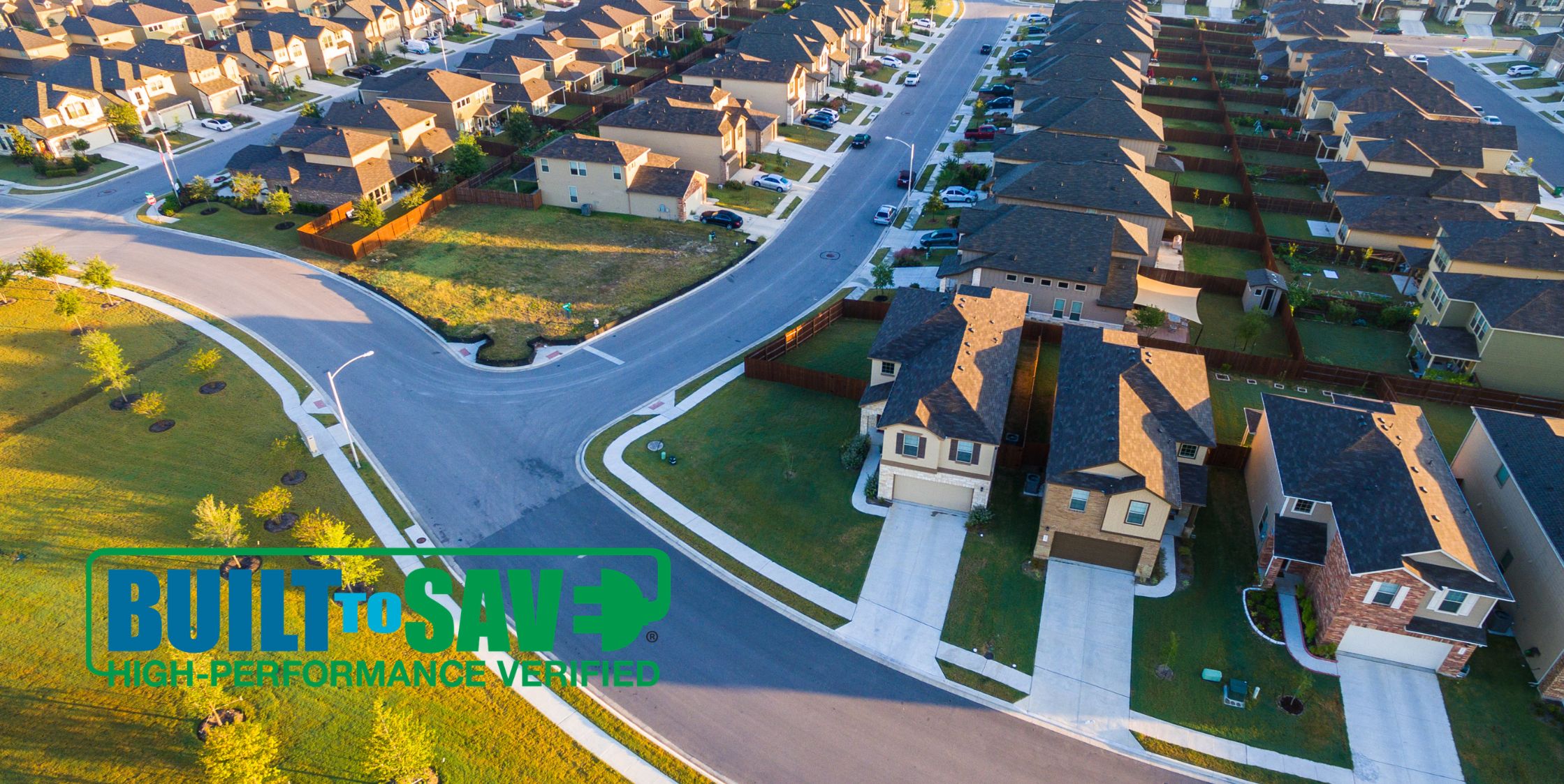
New communities are filling in from the US-281 corridor to the neighborhoods surrounding Pharr’s expanding commercial districts. Some of these subdivisions come from established regional builders with consistent track records. Others are newer entrants moving fast to capture market share. The name on a subdivision sign tells you nothing about what’s inside the walls.
Certification Protects Buyers When Builders Are Moving Fast
When production timelines tighten, the problems that don’t show up on a finishings walkthrough are the first to slip — insulation voids, unsealed penetrations, ducts that weren’t sized using a Manual J load calculation. In South Texas, those shortcuts surface every summer on your electric bill. Built to Save® requires two independent inspections by a RESNET-certified rater who has no financial relationship with the builder. That independence is the whole point. The rater’s job is to find problems, not to sign off on them.
What Built to Save® Certification Tells You About a Pharr Home
A Score, Not a Sales Pitch — HERS/ERI Explained
The HERS score (Home Energy Rating System) is a numeric index where lower means more efficient. A score of 100 equals the national energy code reference standard. Built to Save® requires a HERS/ERI score of 63 or lower — or a home that tests at least 5% better than the Texas energy code baseline. That puts a certified Pharr home well above what minimum-code construction delivers.
When a builder claims their homes are “energy efficient,” ask for the number. A Built to Save® home has one. Learn how Texas home energy certification works and how Built to Save® stacks up on the Built to Save® vs Energy Star vs DOE comparison page.
Who Runs the Inspection (Hint: Not the Builder)
A RESNET-certified energy rater — someone entirely separate from the builder — conducts both inspections required for certification. Builder self-certification creates obvious conflicts of interest, so the program rules that out entirely. The rater is trained and accredited to evaluate energy performance; the rater answers to the rating standard, not to the builder’s schedule. To find a RESNET-certified rater near Pharr, use the rater locator.
What Happens at Each Inspection Stage
Built to Save® requires two stages:
- Pre-drywall inspection: Conducted while framing, insulation, and air barriers are still exposed. The rater checks insulation installation, air sealing at penetrations, duct placement, and other conditions that determine long-term performance — before the walls close and problems become permanent.
- Final inspection: Confirms the completed home, including the HVAC system and all envelope components, performs as designed and clears the HERS/ERI threshold.
Both stages must pass. One inspection alone is not enough.
Why Pharr Homebuyers Benefit from Energy Certification
Lower Utility Bills in a Climate Built for Punishment
Pharr’s cooling season runs from April through October. In a home with poor air sealing or improperly installed insulation, the air conditioner fights the building envelope all day, every day. Built to Save® certified homes are designed and independently tested to minimize that load — which means more predictable monthly bills and less wear on equipment that has to survive 15 to 20 years of extreme heat.
Build Quality You Can Verify Before Moving In
The pre-drywall inspection gives buyers a documented record of what the builder actually did — not just what they promised. Because the rater’s report captures conditions before the walls close, buyers hold a verifiable account of construction quality. A standard builder’s warranty and walkthrough provide neither of those things.
Resale Value in a Market That Keeps Appreciating
Pharr home values have risen alongside the broader RGV market. As buyers grow more cost-conscious about utility bills, third-party certifications carry more weight at resale. A home with a documented HERS score and a Built to Save® certificate is easier to differentiate in a competitive listing — and easier for a buyer’s lender to appraise when energy efficiency is part of the value story.
Don't Buy in Pharr Without Asking These Questions
Buyer protection matters most in a fast-moving market. When subdivisions are filling quickly and builders are closing sales fast, buyers feel pressure to decide before they’ve done their research. These five questions give you the information you need before you commit.
1. “Is this home Built to Save® certified or registered in the program?”
A participating builder will confirm program registration and provide documentation. If they’ve never heard of Built to Save®, that answer tells you exactly what standard the home is actually being held to.
2. “What HERS score is this home designed to achieve?”
Any builder making energy efficiency claims should give you a number — a projected score from a certified rater, or a score achieved by comparable completed homes. “Energy efficient” without a number is marketing language, not a performance commitment.
3. “Will there be a pre-drywall inspection by an independent RESNET rater?”
The pre-drywall stage is where energy problems can still be fixed. If the builder’s process skips independent pre-drywall inspection, any final rating only catches problems after they’ve already been sealed inside the walls.
4. “How does your insulation and air sealing compare to Texas code minimums?”
Texas code is a floor, not a finish line. Built to Save® certified homes must outperform it. Ask whether the builder builds to code minimums or above — and ask for specifics on R-values, blower door targets, and duct leakage rates.
5. “Can you show me energy rating documentation from homes you’ve already built?”
A builder with a consistent Built to Save® track record should have HERS reports or rating summaries available. Reviewing documentation from past homes is a reasonable request and a reliable way to check whether energy efficiency claims are backed by actual test results.
Finding Built to Save® Certified Homes and Builders in Pharr
Built to Save® is sponsored by Magic Valley Electric Cooperative (MVEC) and operates throughout the RGV and South Texas. Certified builders in the Pharr area have met the program’s standards across multiple completed homes and work with RESNET-certified raters who conduct all independent inspections.
To find participating builders or confirm whether a specific community is enrolled, contact the Built to Save® team directly:
- Phone: 956-778-3590
- Email: info@builttosave.org
Builders ready to join the program can get started here.
Considering other RGV communities? See our pages on energy-efficient homes in Edinburg and energy-efficient homes in Brownsville.
Frequently Asked Questions — Pharr, TX Homebuyers
1. What is Built to Save® and how is it different from standard new construction?
Built to Save® is a home energy certification program sponsored by Magic Valley Electric Cooperative (MVEC). Standard new construction only needs to meet minimum Texas energy code. Built to Save® certified homes must achieve a HERS/ERI score of 63 or lower and pass two independent inspections by a RESNET-certified rater at pre-drywall and final completion. Most standard construction involves no independent third-party energy testing at all.
2. Does a certified home in Pharr cost more upfront?
Certified homes may carry a modest premium over minimum-code construction, but the difference is often smaller than buyers expect — and lower monthly utility costs offset it. In Pharr’s climate, where air conditioning runs for the better part of eight months, even moderate efficiency gains add up fast. Many buyers recover any price difference within a few years of ownership.
3. What is a HERS score and what should I look for?
A HERS score measures a home’s energy use relative to a national reference standard. Lower is better. A score of 100 equals the reference standard; a score of 63 means the home uses roughly 37% less energy than that baseline. Built to Save® requires a score of 63 or lower. The What is a HERS score? page has the full breakdown.
4. How do I verify a Pharr builder is participating?
Contact Built to Save® directly at 956-778-3590 or info@builttosave.org to confirm whether a specific builder is enrolled. You can also ask the builder to provide program documentation or a current HERS rating from a recently completed home.
5. Why does MVEC sponsor this program?
Energy-efficient homes reduce peak demand on the electric grid — which helps MVEC manage capacity costs and keeps rates more stable for all members. Homes that use less electricity also mean lower bills for MVEC customers, which supports long-term member satisfaction. The program benefits the cooperative and the homeowner at the same time.
6. Is Built to Save® only for new homes, or can I certify a remodel?
Built to Save® is designed for new construction. The pre-drywall inspection requirement makes certification most practical — and most valuable — when a home is being built from the ground up. For an existing home, a standalone HERS rating from a RESNET-certified rater is an option worth exploring.
Ready to Find a Certified Home in Pharr?
Built to Save® certification is buyer protection you can verify — a documented HERS score, two independent inspections, and a standard built specifically for South Texas conditions. In a market growing as fast as Pharr’s, that verification matters.
Contact Built to Save® to find certified builders and homes in Pharr:
- Call: 956-778-3590
- Email: info@builttosave.org
Are you a builder? Get started as a builder and join the program serving the RGV’s most energy-conscious homebuyers.